
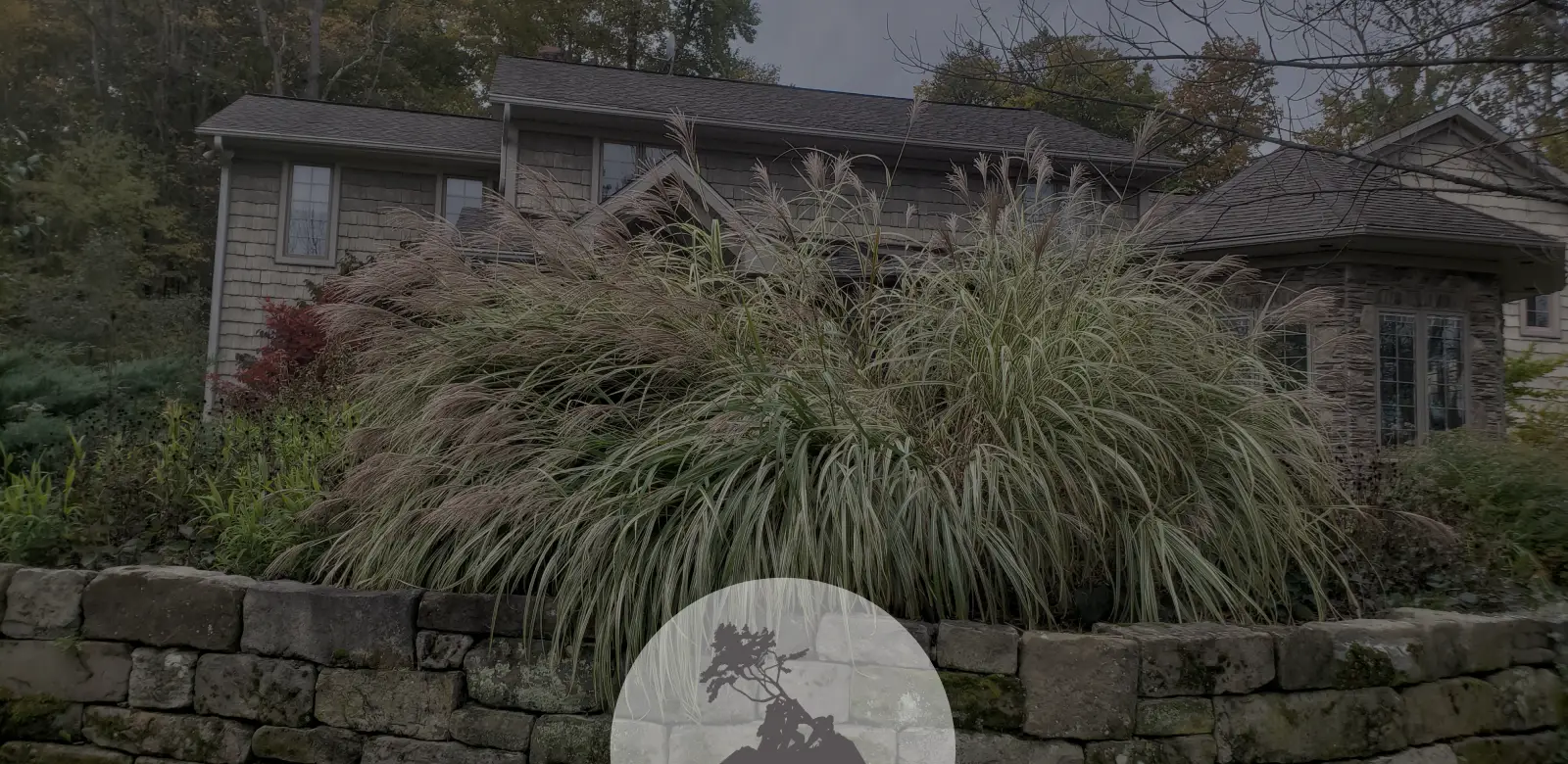
One of Northeast Ohio’s only Advanced Certified Retaining Wall Installers gives his insights on solutions for getting the most out of the outdoor space in your backyard landscape. This discussion focuses on what a retaining wall can accomplish, not the technical steps behind its construction.
Why retaining walls?
Retaining walls allow underused terrain to become functional outdoor space. Many homeowners recognize the limitations in their yard without realizing a retaining wall may be the practical solution.
Our staff is certified to build retaining walls, which establishes a baseline of competency. More important is how that knowledge is applied. Each project is shaped by the site conditions and the way the client intends to use the space. Construction methods will always adjust to the design. This approach allows us to focus on understanding what the customer is trying to accomplish, as opposed to simply how to build a retaining wall.
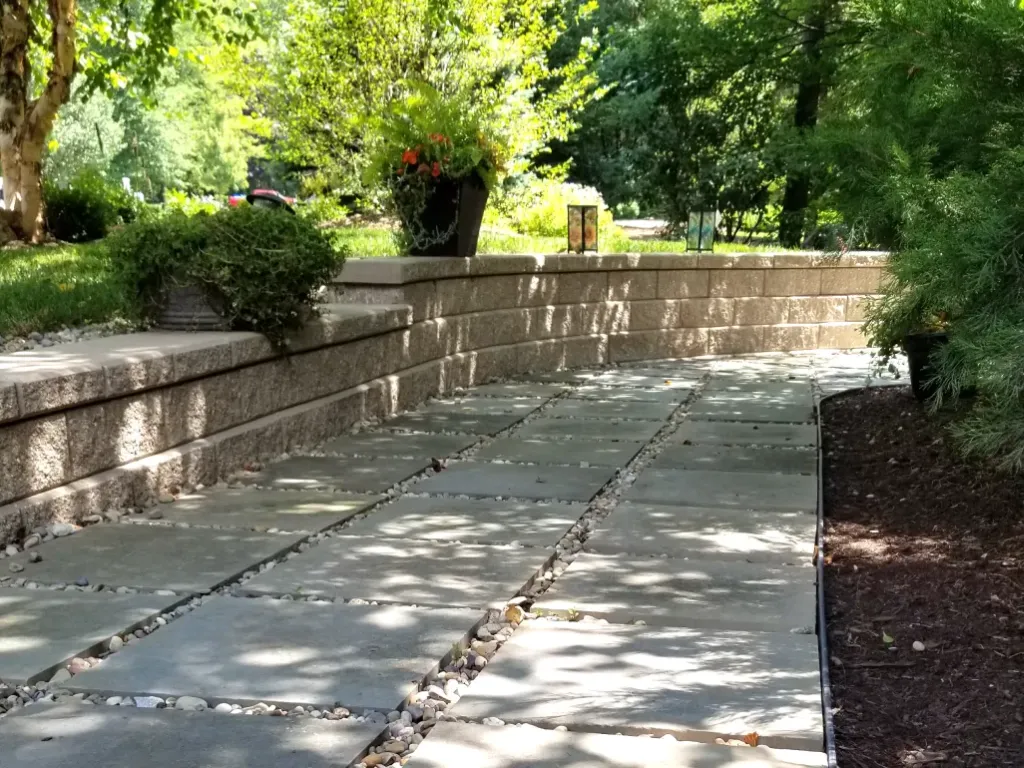
Retaining walls are multi-functional features in an outdoor space, and it’s our responsibility to utilize the structure to its maximum potential. Retaining walls can double as seating walls in your outdoor living space, providing additional leisure area. Furthermore, clients can extend their leisure time by incorporating lighting elements into the wall, further enhancing the entire outdoor space into the twilight. Along with the endless aesthetic options a client can choose for their retaining wall, one of my favorite multipurpose roles for them is their ability to connect multi-tiered spaces by utilizing them as steps. Beyond this, often overlooked in the design process when implementing steps into tiered systems, clients have the advantage of raising their entire space, revealing a veneer option while creating additional structural integrity.
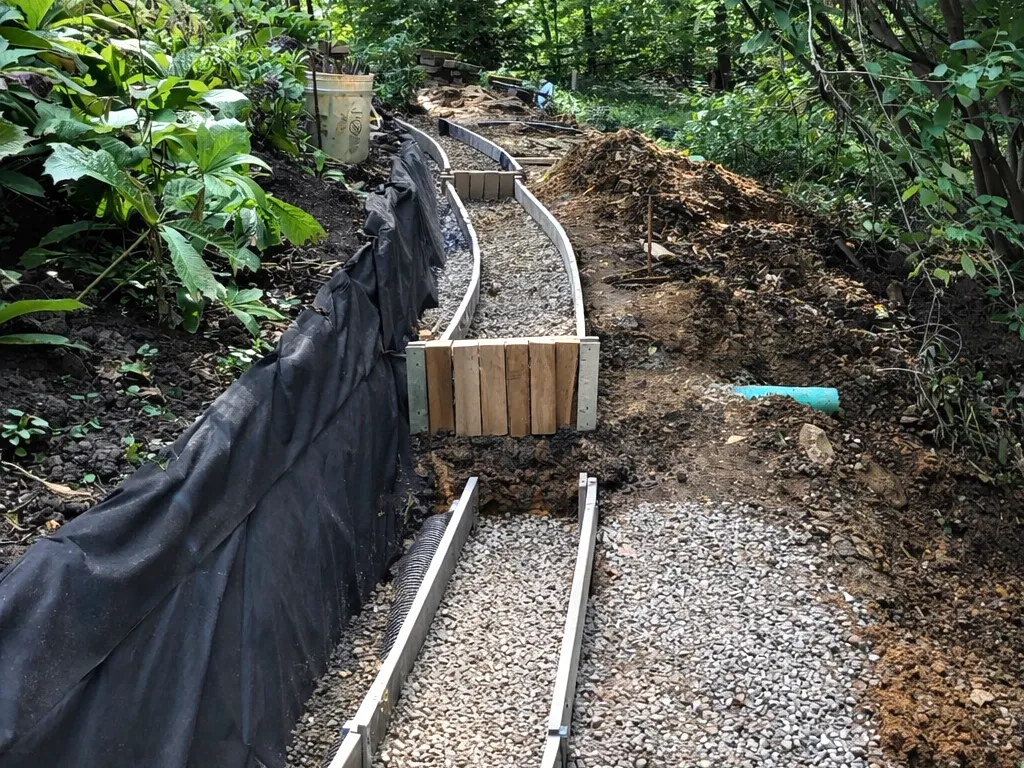
The benefits of retaining walls and what they do for unusable spaces
With the option of retaining walls, they don’t exist. At its core a retaining wall is a structural feature that allow property owners to flatten sloped areas that are too steep to utilize turning entire hillsides into walkable, buildable areas, this also provides contemporary solutions to erosion from rain events and elevate areas of an outdoor space that were once thought to be too wet to consider. Retaining walls help support other decisions that may have once been considered unreasonable or even unreachable.
Are they always the best answer?
Not always. In most cases yes, but when you’re trying to achieve the most functional space, I think it’s necessary to evaluate other avenues and avoid retaining walls in light slope applications that could unnecessarily increase the cost of your outdoor living space.
Having a candid conversation with clients and identifying their pain points and understanding what they are trying to achieve will define their goals and assist in making informed decisions about the use and placement of retaining walls. We touched earlier on some of the drainage solutions a retaining wall can facilitate, but maybe the area needs to be utilized for stormwater management instead, and the client is prioritizing ecosystems over usable space, for example. I personally would not try to force a retaining wall in that situation. Instead, maybe a rain garden installation would be a better fit.
How do you tell if you need a retaining wall?
Deciding whether a retaining wall belongs in an outdoor space comes down to how the land is meant to be used and what limitations continue to interfere with that use.
When grade changes, erosion, or water movement restricts access or leaves parts of a property underutilized, retaining walls offer a practical way to manage those conditions. They allow terrain to be shaped for a specific use rather than worked around indefinitely. In many cases, they turn problem areas into usable ground that supports a family’s needs.
How to determine if a retaining wall is needed starts with an honest look at how your property is actually functioning. Are there slopes you avoid? Areas that wash out after heavy rain? Grades that make sections of your yard feel off-limits? Those are the conversations worth having with a professional before ruling anything in or out.
At the same time, retaining walls are not a blanket solution. Their value depends on conditions, goals, and the role the space is meant to serve over time. When applied with restraint and understanding, they become part of a larger plan rather than a standalone fix.
What did we learn about retaining wall installation?
Well-considered outdoor spaces do not rely on any single feature to solve every issue. They are shaped by clear goals, realistic limitations, and solutions chosen for the problems they address. Retaining walls serve that purpose when a site requires long-term stability and usable elevation changes.
Carmel Landscapes designs and builds retaining walls throughout the Chagrin Valley and Greater Cleveland area. If your property has slopes, erosion, or spaces you’ve stopped using, contact us to discuss what’s possible, and what’s right, for your landscape.

Find out what's new with your local certified landscape professional
We're hiring!
Carmel Landscapes is seeking motivated, skilled workers to join our team. Skilled laborers are needed for our high-end hardscape projects. Horticulture and landscape technicians are needed to help design, plant and maintain our sustainable, eco-friendly projects.
We value hard work, craftsmanship and an eye for detail, offering competitive pay and full-time employees enjoy benefits and PTO.